
TL;DR
Having great ads doesn’t matter if the wrong people see them. The key is “Audience Activation”—using first- and third-party data to find your ideal customers and then reaching them with personalized, multi-channel campaigns that actually connect and drive results.
As Chief Growth Officer at Lotame, I’ve spent years navigating the intricate relationship between audiences and advertising. It’s like two sides of the same coin—you can’t have one without the other. But which comes first? The chicken-or-egg debate applies here too: Do you create an offer you want to advertise and then find an audience, or do you get to know your audience and figure out what to offer them? Historically, brands have approached it both ways. However, in today’s digital age, it’s easier and more effective to lead with an audience-first strategy. Let me show you why.
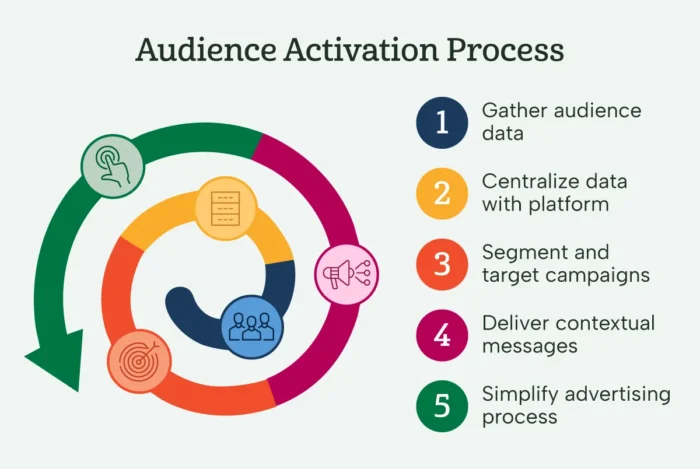
Audience activation is about gathering all the data you have on your target audience—first, second, and third-party data—and centralizing it using a platform like a data collaboration platform. This allows you to segment and target your campaigns effectively. Once that foundation is set, advertising activation becomes delivering memorable, meaningful, and contextual messages. It’s easier said than done, but trust me, when you nail audience activation, the advertising piece becomes a lot smoother.
Let’s dive into some tried-and-true strategies alongside newer, experimental approaches to activate audiences and run effective marketing and advertising campaigns.
What Does It Mean to Activate Audience Data?
There’s a quiet but important distinction between having audience data and activating it.
Most marketers have audience data. It lives somewhere — in a CDP, a DMP, a CRM, a spreadsheet exported from last quarter’s email campaign. It contains useful things: who your best customers are, who’s almost bought, who churned, who clicked through three product pages this week.
To activate audience data means to take that data out of storage and put it to work. It’s the moment a segment leaves the database and starts shaping a real customer experience — a personalized ad in a CTV slot, a triggered email that lands the morning after a cart abandonment, a homepage hero that changes based on the visitor’s loyalty tier, a paid social audience that excludes customers you don’t need to acquire again.
Three things have to be true for activation to actually happen:
- The audience has to be defined precisely enough to act on. “Engaged users” isn’t actionable. “Visited the pricing page twice in the last 7 days and isn’t already a customer” is.
- The audience has to be connected to the channels where you spend. A perfect segment that only lives in one tool is a half-built segment. Strong activation flows the same audience into paid media, email, on-site personalization, and CRM — automatically.
- The audience has to update in something close to real time. A segment refreshed once a quarter is stale by the time you ship a campaign. The faster the loop between behavior and activation, the more performance you’ll see.
When people say “audience activation isn’t working,” they almost always mean one of these three things is broken. The rest of this article walks through what activation looks like when all three are working including the omni-channel, identity, and measurement strategies that make it stick.
Tried and True: Omni-Channel Advertising
While there’s still plenty of businesses executing traditional media and advertising (think direct mail, radio, and billboards), most people researching audience and ad activation are thinking about digital distribution. 77.7% of total media spend last year went to digital channels according to eMarketer.
That being said, it’s essential that brands execute omni-channel marketing (if they have the budget to do so) which includes all of your traditional media (cable TV, print, radio) combined with all the swath of digital channels including search, social, CTV, email, SMS and others. Fortunately platforms exist now that bridge and bring together hundreds of data sources that aid in audience segmentation and activation. Lotame Data Exchange (LDX), for example, offers a wide range of audience segments, allowing brands to target their ideal customers.
All of this data can also be used within the Spherical data collaboration platform to better analyze where these audiences are most active, most receptive, and what might compel them to act. On top of that, this data can help you figure out how to better distribute your budget properly.
How this looks: LookGreat Skincare
Let’s give you a made up example to understand this a bit better: a new product for a B2C brand with an omni-channel advertising approach to ensure ideal audience activation. Let’s use the example of “LookGreat,” a premium wellness brand offering eco-friendly skincare products to millennial women aged 25-35. To create a balanced campaign, the budget is proportionately distributed across both traditional and digital media, using the unique strengths of each channel.
Let’s break this down:
- Campaign Objective: Launch a new eco-friendly skincare product targeting millennial women aged 25-35.
- Total Budget: $500,000.
Traditional Media (25% of Budget: $125,000):
- Lifestyle Magazines (40%, $50,000): Full-page ads in popular beauty and wellness magazines to emphasize sustainability, clean ingredients, and visually appealing packaging.
- TV Advertising (40%, $50,000): Ads on niche channels resonating with millennial women during prime-time slots, featuring testimonials and compelling visuals of product use.
- Out-of-Home (OOH) Advertising (20%, $25,000): Eco-friendly billboards in high-traffic urban areas to build buzz and awareness.
Digital Media (75% of Budget: $375,000):
- Paid Social Media Ads (50+%, $200,000): Campaigns on popular social platforms like Instagram, Reddit,TikTok, and Pinterest, showcasing user-generated content and videos highlighting the brand’s mission and product benefits.
- Programmatic Ads & Retargeting (30+%, $125,000): Continue engagement with users who interact with the website or ads through targeted, relevant messaging.
- Search Engine Marketing (SEM) & SEO (10+%, $50,000): Captures interest from users actively shopping for skincare solutions online.
This approach strategically blends traditional media’s broad reach with digital media’s precise targeting and high engagement potential. By allocating 75% of the budget to digital efforts, LookGreat leans in on the habits of a digitally savvy audience for sustained exposure and to help drive more sales.
Strategies for 2025 and Beyond
Omni-channel is great when done correctly but you might not have the time or resources to execute it. Here are some additional ideas you can layer into your omni-channel approach or as independent tests:
Personalization at Scale
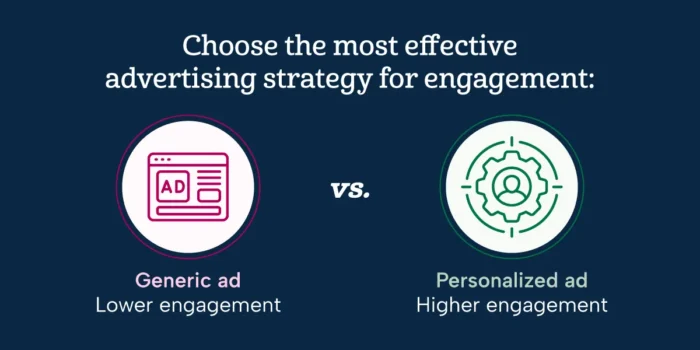
In the age of always-connected and instant gratification, consumers have come to expect brands to speak directly to their needs, preferences, and lifestyles. Personalization at scale leverages data and technology to deliver tailored experiences to audiences across channels. Whether it’s personalized email campaigns, dynamic website content, or product recommendations based on past behavior, personalization drives improved conversions.
Analyzing user data, brands can use customer preferences to serve relevant ads or offers, creating a stronger connection with the audience. Personalization improves the customer experience and drives higher engagement and conversion rates, making it a fundamental strategy in modern advertising.
Interactive Content
Interactive content engages audiences in ways that traditional ads often cannot. Gamified experiences, quizzes, and augmented reality (AR) filters invite users to actively participate in the brand experience, making it more memorable. Our example skincare brand can use AR (e.g. image filters) to let users “try on” different products virtually or take a quiz to determine their ideal skincare routine.
Influencer Partnerships
Influencer marketing has evolved from a trend to a mainstay strategy in reaching niche audiences. Influencers offer authenticity to brand messaging, as their followers view them as trusted voices in their respective communities. Working with influencers who share brand values, companies can reach engaged, targeted audiences.
The key to success lies in choosing the right influencers who get the brand’s vision but allowing them creative freedom to present products in an authentic way. This builds trust, reach, and organic engagement with the brand.
Social Commerce
Social commerce blends the shopping experience with social media, enabling users to browse, discover, and purchase products without ever leaving their favorite platforms. With features like in-app shops, shoppable posts, and live-streamed sales events, social commerce reduces friction in the purchase process, making it seamless for consumers to go from discovery to checkout.
It’s particularly effective for visually-driven industries like fashion, beauty, and home decor. Social commerce not only accelerates conversions but also creates an immersive shopping experience that feels less like a sales pitch and more like an organic part of the user’s social media journey.
Sustainability and Purpose-Driven Marketing
Consumers increasingly align their spending with their values, making sustainability and purpose-driven marketing critical strategies for modern brands. Campaigns that highlight eco-friendly practices, community contributions, or social responsibility initiatives resonate strongly with conscious consumers.
For example, brands might showcase their carbon-neutral manufacturing process, donate a portion of sales to charitable causes, or emphasize sourcing materials ethically. This strategy not only differentiates brands but also builds long-term loyalty by aligning with the values of their audience. Purpose-driven marketing demonstrates that a brand stands for more than profit.
These new strategies represent a shift toward more immersive, authentic, and value-driven advertising approaches. Using these tactics in campaigns, brands can effectively capture the attention of modern audiences while delivering meaningful, measurable results.
Activate Audience Data Across the Identity Layer
You can’t activate audience data well in 2026 without an identity layer underneath it.
The reason is structural. Audiences only matter to the extent that you can reliably recognize the same person across the channels you’re trying to reach them on. Without an identity foundation, a customer who looks at your product on mobile, browses again on desktop, gets an email on their tablet, and finally clicks a CTV ad on a smart TV looks like four different “users” to your activation stack. Frequency caps don’t hold. Suppression breaks. Attribution rolls up to the wrong segment. Personalization fires the wrong message because the system doesn’t know it’s the same person.
Identity resolution fixes this. It connects the signals (hashed emails, device IDs, household graphs, behavioral consistency) and produces a persistent ID that travels with the audience wherever it’s activated. For category fundamentals, see: what is identity resolution.
Two practical implications for audience activation:
1. Identity decides which channels you can actually activate on. The audience you’ve built is only as activatable as the identity layer’s match rate against each destination. A 70% match rate to a DSP gives you serious addressable reach; a 20% match rate gives you a science experiment. Strong identity = strong activation. Weak identity = weak activation. The audience is the same and the difference is plumbing.
2. Cookieless identity is no longer optional. With third-party cookies winding down, the identity layer needs to work without them. Solutions like Lotame’s Panorama ID build persistent, privacy-safe IDs out of consented first-party and contextual signals so audience activation continues working as cookies disappear. (Case study: cookieless identity drives better performance.)
If your team is feeling friction in audience activation today and isn’t sure why, the answer is almost always at the identity layer. Get that right and the rest of the activation stack starts producing the results the data should be capable of.
Technologies: How to Execute Advertising and Audience Activation
We need technologies to make all of the above happen. From collecting and analyzing data to delivering personalized, multi-channel campaigns, the tools that follow provide the foundation for modern advertising. With these tools in your stack, you’ll uncover deep audience insights, streamline ad operations, and deliver experiences that meet the earlier criteria of being meaningful, memorable, and contextual.
Data Collaboration Platforms: Data collaboration platforms are critical tools for modern advertising, allowing brands to unify their first-party data with external data sources to build a more holistic understanding of their audiences. Using these platforms, brands can create enriched audience profiles and detailed segmentation using online behavior, demographics, and intent. For instance, Lotame specializes in enabling businesses to onboard, connect, analyze, enrich, and activate data, including access to high-quality, addressable audiences. This is particularly powerful in a cookieless world, where identity resolution and the ability to connect data across devices and platforms are key to effective audience engagement.
Beyond data enrichment, DCPs are invaluable for audience curation. Advertisers can define custom audience segments tailored to their specific campaign goals, whether it’s targeting eco-conscious consumers for a sustainability-driven campaign or high-income individuals for luxury products. Data collaboration tools allow advertisers to refine these segments with real-time insights so the audience stays relevant and aligned with campaign objectives.
In programmatic advertising, data collaboration platforms play a central role in programmatic curation. They enable advertisers to integrate their curated audience segments directly into programmatic ad-buying platforms such as Supply Side Platforms (SSPs) where the audiences can be targeted across a selection of preferred publishers. This ensures that the precision targeting capabilities of programmatic advertising are paired with high-quality, data-driven audience insights. Advertisers can then optimize their bids in real-time, focusing ad spend on the most valuable impressions to prevent wasted spend. The ability to curate audiences programmatically also allows for dynamic retargeting strategies, where messaging evolves based on user interactions, further increasing campaign relevance and effectiveness.
Analytics Tools: Analytics platforms help you understand campaign performance, audience behavior, and engagement trends. They allow advertisers to measure what works and what doesn’t, enabling data-driven decisions. These tools are instrumental in optimizing campaigns in real-time, ensuring resources are focused on strategies that drive the best results.
Customer Relationship Management (CRM) Systems: CRMs manage customer data and help nurture customer relationships. By tracking customer interactions across channels, these systems help businesses identify opportunities for deeper engagement through personalized offers or targeted communications. CRMs also support long-term loyalty-building efforts by centralizing customer data and enabling better lifecycle management.
Programmatic Advertising Tools: Programmatic platforms automate the ad-buying process, making ad buying more efficient. They use machine learning and algorithms to place ads in front of the right people at the right time, often in real-time. This precision targeting ensures brands boost ROI while reducing wasteful ad spend.
Marketing Automation Software: Marketing automation platforms streamline email campaigns, lead nurturing, and social media posts. They are particularly effective for maintaining consistent engagement across multiple touchpoints, enabling brands to stay top-of-mind with their audiences without manual effort.
Artificial Intelligence and Machine Learning: AI/ML tools take personalization to the next level by analyzing large datasets to predict audience preferences and behaviors. They help create dynamic, tailored content and optimize campaigns in real-time, making every interaction more meaningful and effective.
Augmented Reality (AR) and Virtual Reality (VR) Solutions: AR and VR technologies offer immersive, captivating experiences through virtual product try-ons or interactive brand experiences, these tools build engagement and provide a memorable connection to the brand.
Social Media and Influencer Tools: These tools manage social campaigns, identify influencers, and analyze engagement. They help brands leverage the power of community and word-of-mouth by connecting with audiences in the spaces they frequent most.
Geotargeting and Beacon Technology: Geotargeting tools enable location-based advertising that delivers contextually relevant messages to audiences in real time. This hyper-local targeting is particularly effective for driving foot traffic or promoting local events and offers.
Content Management Systems (CMS) with Personalization: CMS platforms allow brands to create and manage tailored digital experiences. By integrating audience insights, these systems enable dynamic content delivery more specific to with individual preferences, ensuring websites and apps remain engaging and relevant.
CDP vs. DMP vs. DSP: Where Audience Activation Actually Lives
If you’ve ever sat in a meeting where someone called the CDP a DMP and the DSP “the activation platform” and everyone nodded along, you’re not alone. The acronyms overlap in marketing decks. They don’t overlap in what they actually do.
CDP (Customer Data Platform). Stores unified, identity-resolved profiles of known people usually built from first-party data like CRM records, email engagement, app behavior, and purchase history. The CDP is where your customer view lives. Strong CDPs handle identity stitching internally and push segments out to downstream tools.
DMP (Data Management Platform). Built originally to store and segment audience data at scale (first-, second-, and third-party) and push those segments to paid media. Modern DMPs have evolved into broader audience platforms that handle identity resolution, cookieless ID generation, and activation across DSPs, walled gardens, and CTV.
DSP (Demand-Side Platform). Buys media. A DSP is where you actually execute the buy: bidding on impressions, applying audience targeting, managing frequency caps, and reporting on performance. The DSP doesn’t usually create audiences; it activates the ones built upstream.
How they fit together for audience activation:
| Layer | Role | Examples |
|---|---|---|
| CDP | Unified customer profiles (first-party, known users) | Segment, mParticle, Treasure Data |
| DMP | Audience storage, identity, third-party data, distribution | Lotame |
| DSP | Media execution (open programmatic, CTV) | The Trade Desk, DV360 |
A few practical notes:
- The lines are blurring. Modern audience platforms often span CDP-and-DMP capabilities; some DSPs are adding CDP-like features. Choose around the specific job to be done, not the acronym.
- For audience activation specifically, the DMP (or its equivalent) is usually where the heavy lifting happens: identity, third-party enrichment, multi-channel distribution.
- You don’t always need all three. Some teams run a CDP-and-DSP combo; others run a DMP-only stack. The right architecture depends on data volume, channel mix, and how much identity work needs to happen.
How to Activate Audience Data: A 5-Step Workflow
The strategy and technology sections above are the what. Here’s a five-step workflow you can run in any audience activation program.
1. Collect with intent. Don’t collect every signal you can; collect the signals that map to a real audience decision. Hashed email at sign-up. Behavioral events that signal intent (added to cart, downloaded the white paper, watched 75% of the explainer video). Purchase and post-purchase data. Loyalty engagement. Capture less, but capture it cleanly, with consent, and with clear schema.
2. Unify around identity. Stitch your collected signals into a single profile per person using a strong identity resolution layer. Without this step, the same customer shows up as four users across your CDP, your pixel, your CTV partner, and your email tool and nothing else in the workflow will hold together.
3. Segment around business outcomes. Move from raw attributes to business-relevant audiences. “High-intent prospects in growth markets,” “lapsed loyalty members in the 90–180 day window,” “first-time buyers in the last 30 days.” Each segment should have a specific reason to exist and a clear next-best-action.
4. Activate across every channel where you spend. Push your segments to the destinations that matter. DSPs for programmatic display, video, and CTV; walled gardens for paid social; your email and personalization tools for owned channels; CRM for outbound. The audience is one asset; the channels are many. Strong activation makes this push automatic, not manual.
5. Measure, learn, and feed back. Track performance per segment including conversion rate, ROAS, retention, engagement. Feed the results back into the segment definitions. The audience layer should evolve continuously based on what’s actually working. The “Measuring Success” section below has more on what to track.
Run this loop continuously and audience activation stops being a quarterly project and starts being an operating model. (For a complementary perspective on the front end of this workflow, see: how to build a first party audience.)
Measuring Success in Audience Activation
When I evaluate the effectiveness of activation and campaigns, traditional metrics like impressions, CTR, and ROAS are essential. But I’ve learned to go deeper. Metrics like dwell time, sentiment analysis, and audience segment performance reveal the true impact of your efforts. Post-campaign surveys, for instance, can uncover qualitative insights that numbers alone can’t provide. We dive deeper into each of these metrics below.
How to know if my audience and ads are working well?

Here are the more traditional metrics you’ll want to measure:
Impressions and Reach: These metrics indicate how many people saw your ads or campaign to measure overall exposure and assess whether your campaign reached its intended audience.
Engagement Rate: A sum of all of the likes, shares, comments, clicks, and other interactions divided by the total audience. High engagement signals that your content meets audiences preferences and expectations.
Click-Through Rate (CTR): CTR calculates the effectiveness of your call-to-action (CTA) by calculating the percentage of people who clicked on your ad after viewing it. It’s a key metric for evaluating ad creativity and relevance.
Conversion Rate: Track how many users completed a key event divided by total audience shown an ad. Key events include purchasing a product, requesting a demo, and various other touchpoints that are important and specific to a company. It directly measures the campaign’s ability to drive strong results.
Customer Acquisition Cost (CAC): CAC represents how much it costs to acquire a new customer through your campaign. Lower CAC typically indicates more efficient audience targeting and activation.
Return on Ad Spend (ROAS): ROAS calculates revenue for over ad spend. It’s a critical metric for determining the overall profitability of your campaigns.
Audience Retention and Loyalty: Tracking repeat interactions or purchases reveals how well your campaign nurtures long-term customer relationships, beyond initial activation.
What are some other ways I can analyze audience and advertising performance?
Aside from the long-standing metrics, here are some other ways to look at data to see how well your campaigns are performing:
Dwell Time: For campaigns with interactive or immersive content (e.g., quizzes, AR/VR experiences), measuring how long users engage with the experience to see how sticky the content is.
Cross-Channel Attribution: Analyzing which channels most help drive conversions lets you optimize your media mix. Advanced attribution models, like multi-touch attribution, go beyond “last-click” to evaluate the entire customer journey.
Audience Segment Performance: Break down performance metrics by audience segments to understand which groups respond best to your campaigns. This can highlight untapped opportunities or find opportunities for improvement.
Sentiment Analysis: Assesses user behavior online, including user comments, reviews, and social media mentions, brands can measure the emotional impact of their campaigns. Sentiment analysis tools guide brands on how audiences perceive the brand and its messaging.
Post-Campaign Surveys: Direct feedback from your audience can uncover qualitative insights about what worked and what didn’t. Surveys also help assess brand recall and perception shifts.
Common Audience Activation Mistakes (and How to Fix Them)
Even strong teams make the same handful of audience activation mistakes. Here are the five we see most often and what to do about each.
1. Over-segmenting until nothing scales. It feels precise to slice your audience into 47 micro-segments. In practice, you end up with too-small segments that no platform can deliver against efficiently. Fix: start with 5–10 strategically meaningful audiences. Add complexity only when you have evidence a sub-segment behaves differently enough to justify it.
2. Ignoring identity until it becomes the bottleneck. A lot of teams build audiences for months, then discover at activation that match rates are 15% and frequency caps are broken because there’s no identity layer underneath. Fix: invest in identity resolution before you start optimizing segments.
3. Activating in one channel and calling it done. Audience activation in email only, or paid social only, leaves most of the value on the table. The same audience should fuel paid media, email, on-site personalization, and outbound.. Fix: design every audience to be channel-portable from day one. If the segment definition only works in one tool, try to rebuild it.
4. Measuring at the campaign level instead of the audience level. “ROAS = 3.4” is a campaign metric. It doesn’t tell you which audience delivered the 3.4 or which segment dragged it down. Fix: break out every report by audience segment. The insight isn’t usually “the campaign worked”, it’s “this audience drove most of the value, and that one should be dropped.”
5. Treating audiences as static. Audience definitions decay. Customers churn, signals go stale, what worked last quarter under-performs this quarter. Fix: treat the audience layer as a living asset. Refresh segment definitions on a regular cadence, run holdout tests to validate lift, and feed measurement learnings back into the segments themselves.
Final Thoughts
Audience and advertising activation isn’t just about delivering messages; it’s about creating something your audience actually remembers. It’s about seeing through the noise of countless campaigns and creating memorable moments. I’ve had the privilege of working with brands that went beyond the surface, crafting campaigns that both engage and inspire loyalty and trust.
I often think back to a conversation I had with a marketer who told me, “Success is when your audience doesn’t just remember your ad, they feel like it was made for them.” That stuck with me. At Lotame, we believe every marketer has the power to make their audience feel seen and valued. It’s not about chasing the latest trends; it’s about understanding people—their motivations, their stories, their aspirations.
In an industry that evolves as fast as ours, staying grounded in the fundamentals of human connection is key. Combining traditional strategies with cutting-edge innovations, we can do more than meet expectations; we can exceed them. Together, let’s create campaigns that both perform and leave a lasting impact. Let’s connect to discuss how Lotame can help your individual business make meaningful connections that last.
By Alexandra Theriault, Chief Growth Officer at Lotame
About the Author