
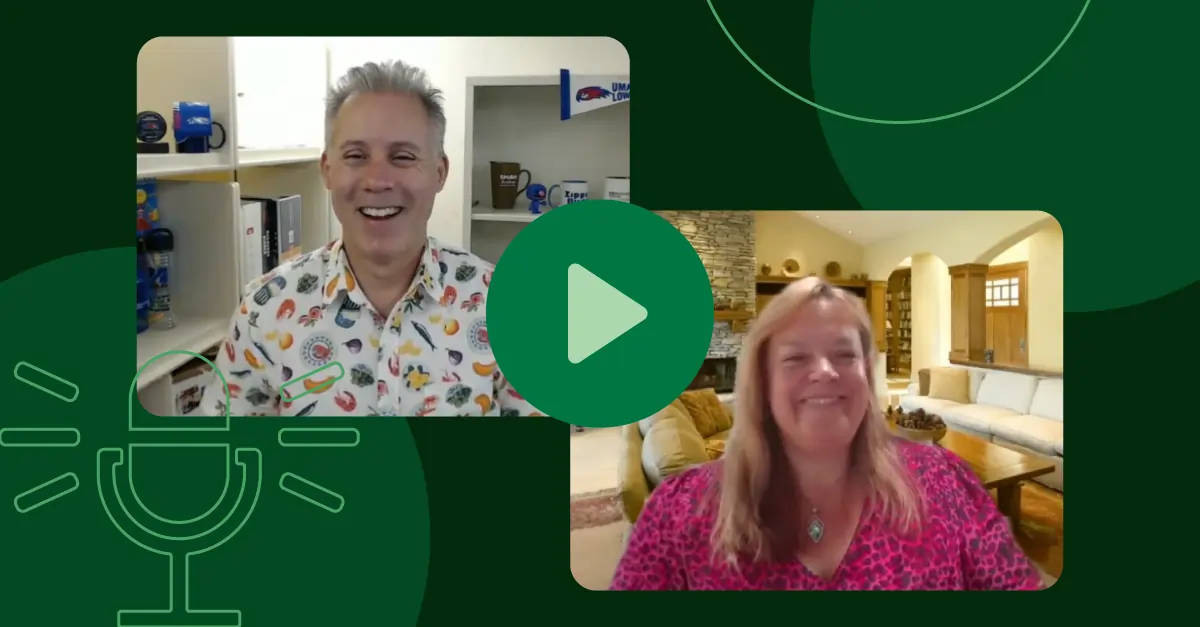
Alison Harding has spent her career in the front lines of advertising’s biggest transformation. She started in classified newspaper sales, knocking on doors and walking the high street. Today, she leads data solutions across EMEA at Lotame, helping brands reach billions of consumers through smarter targeting.
In a recent episode of Meeting You Where You’re At, Alison sat down with host Richard Juknavorian to talk about reinvention, leadership, mentorship, and why human connection still wins in the age of AI. Here are the highlights from their conversation.
Q: You started in newspaper advertising sales. What drew you in?
Alison: I always wanted to be in advertising. When I was 12, I won a competition to tour a local newspaper, and I remember thinking it was the most exciting thing I’d ever seen.
When I started working there at 21, I was part of classified sales. That meant 30 effective calls a day, which really meant over 100 dials to actually speak to people. I worked with dry cleaners, cobblers, pubs, restaurants. You’d just turn up and have a conversation.
It was part of a community. You felt like you were helping the high street. I loved it.
Q: You once literally stopped the presses. What happened?
Alison: I spotted an ad that was about to print wrong. It would have cost us thousands. So I had to hold up the press for about 10 minutes, right before the Sun newspaper was due to print.
The Sun went out 10 minutes late that night. Someone complained. But the ad ran correctly.
Q: How did the move into digital advertising and ad tech happen?
Alison: By 2008, we were managing the deficit. Hearing things like “the motors team only lost 20 grand this week” was disheartening. You could see people weren’t going to wait a week for the paper anymore.
I took time off to travel. When I came back, a cost-per-click network took a chance on me. I wasn’t clued up on programmatic, but they saw the relationship-building and sales skills. They taught me the industry.
I remember being blown away that ads get served in milliseconds. I fell in love with ad tech the same way I’d fallen in love with newspapers.
Q: Tell us about your current role at Lotame.
Alison: I lead the demand side of the business across EMEA. We build high-intent audience segments around the audiences marketers are trying to reach — whether that’s a C-suite executive with more than five children who plays golf on the weekends, a declared dog owner, a chocolate lover.
Clients can activate that data with inventory across Meta, social, programmatic, CTV, cross-device, and cross-border. We have scale in nearly every country in the world.
If you want one strategy to run across France, Italy, Germany, and Belgium, you don’t need to find different partners. That’s what Lotame does.
Q: There’s been noise about third-party data going away. What’s your response?
Alison: I had to repeat this constantly: it’s cookies, not data. Data is still very strong.
If you can target a mum of a two-year-old, or someone who’s declared themselves a dog owner, that’s beneficial to the campaign’s result. Data isn’t one-size-fits-all. A chocolate brand needs creative emotion at snack time. A dog food brand wins by reaching declared dog owners, even on a toothpaste site.
Q: How do you lead teams through constant change and ambiguity?
Alison: Set clear direction. Stay focused on outcomes. Be flexible enough to evolve when the landscape shifts.
Consistency in how you lead creates confidence. But the biggest thing is people. Customers still buy from people. Building trust and bringing teams with you is the key.
Q: How would you describe your leadership style?
Alison: Collaborative, and very focused on giving teams space.
My natural instinct on a joint sales call is to lead the conversation. But the rule I follow is: only step in if you can see you’re about to lose the sale. If the salesperson is finding their feet, let them.
Early on, I’ve also lined up a piece of business for a new hire just to give them an early win. People need that confidence.
Q: What separates the best salespeople in your team?
Alison: Relationships. The best people aren’t blasting 5,000 cold emails. They’re smart. They find something in common on LinkedIn, show up at events, and build real connections.
When you do outreach, always think: what’s in it for me? That’s what the prospect is thinking. Starting with “Lotame has been around for 20 years” falls flat. Show them how you’ll make them look good in front of their client, save them money, or share competitive intel they’ll find useful.
Q: Representation matters to you. Why?
Alison: Encouraging the next generation of women into our space isn’t just the right thing to do. It drives innovation, growth, and better decision-making. Diverse teams build stronger strategies and better outcomes for clients.
Visibility matters. Clear role models matter. Mentorship matters. I’ve done the Bloom mentorship in the UK, and I’m part of groups like Women in Programmatic and Digital Leading Ladies.
But I also feel strongly that we shouldn’t be on a panel just because we’re female. We should be there because we have something people want to hear.
Q: What’s your approach to mentoring someone new?
Alison: Start by asking what they actually want to achieve. Do they want more visibility? A pay rise? A promotion?
If it’s a pay rise, the conversation isn’t “ask your boss.” It’s “what can you offer, and how do you show it?”
One thing I had to learn the hard way: stop over-explaining when you say no. If a boss asks you to stay late and you have plans, you don’t owe them a breakdown of your evening. “I have a personal engagement” is a complete sentence.
Q: You’ve made financial literacy a passion project. Why?
Alison: Because the stats are striking:
- 67% of UK women don’t feel confident managing their finances (Starling Bank)
- 58% of married women defer long-term financial decisions to their spouse (UBS)
- Only 29% of women feel confident planning for retirement (Fidelity)
I spent 15 years not having my pension sorted. I’m now scrambling to catch up. My presentation to Women in Programmatic covered simple moves, like increasing pension contributions by 1 to 2% in your 20s, which can mean an extra £200,000 at retirement.
The mindset is the hard part. That 2% feels like £50 you need this month. But if you managed before a pay rise, put part of the next one into your pension and never see it.
I want to talk about this as much as possible. It’s what I wish someone had told me.
Q: How do you define success today?
Alison: It’s not the pursuit of happiness. It’s the happiness of the pursuit.
You can give a child a mansion and they’ll never feel fulfilled. The journey, the falls, the rises, that’s what makes it worthwhile.
I came back from traveling with a few hundred pounds in my pocket and moved into a flat share in London in my early 30s. People said traveling alone was brave. Rebuilding my career from scratch was braver. That’s success.
Q: What are you still learning?
Alison: Everything. This industry has never bored me.
I’ve never sat back and thought, “I’ve nailed leadership.” Every new team brings new challenges. Hiring is a bit like shopping. Sometimes you get the best thing you’ll ever wear. Sometimes it sits in your wardrobe for six months before you realize how good it is.
The industry is the same. There’s no version of “we’ve figured it out, we’ll just keep making money the same way.” Your competitors are at your heels every step of the way.
The Takeaway
Alison’s career maps neatly onto the last two decades of advertising itself: from local relationships and printed pages to global data activation in milliseconds. What hasn’t changed is what makes it work. Trust. Relationships. Curiosity. And the discipline to keep learning.
That’s the kind of compound experience that shapes better outcomes for clients, and it’s what Lotame has been building for 20 years. Smarter, faster, easier advertising, powered by data and the people who know how to use it. Why risk it on anything less?
About the Author

Topics
